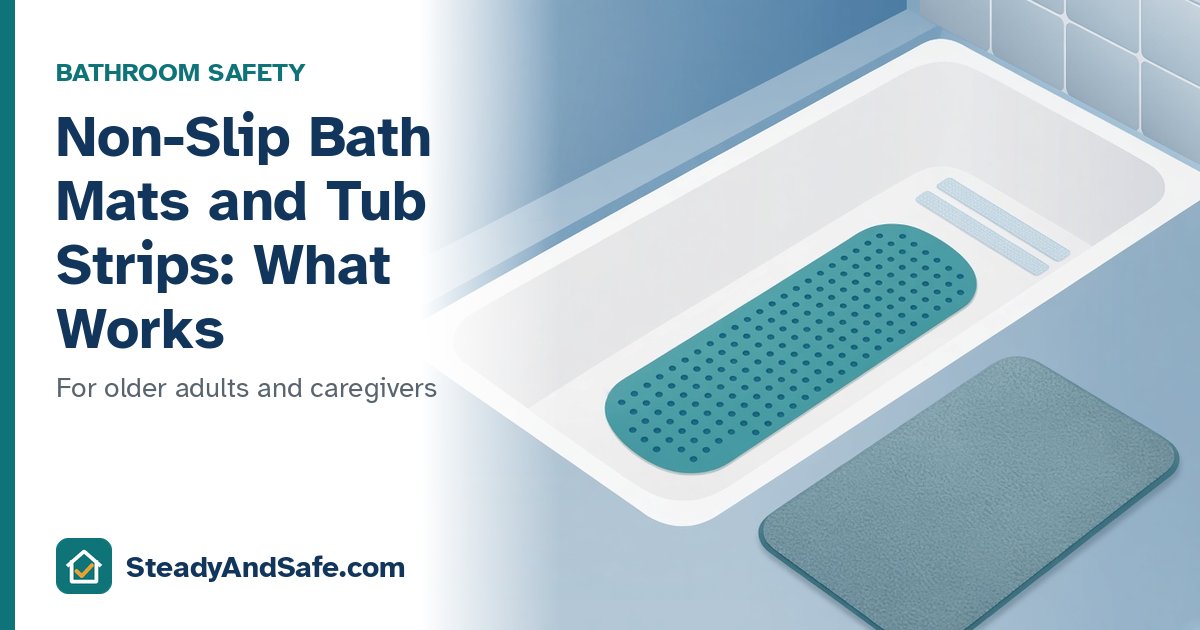
A wet tub floor is one of the slickest surfaces in the house. Add soap, a tired body, and a step over the tub wall, and it's easy to see why the bathroom is where so many people start making changes. A non-slip mat is usually the first and cheapest of those changes.
It's also the one most often done halfway. A mat that slides, curls at the edges, or grows mold underneath can be worse than no mat at all. This guide covers the main options, what each one needs to work, how to keep it safe, and which products are worth comparing.
The quick answer
- Inside the tub or shower: use a suction-cup mat or adhesive strips on the floor. MedlinePlus recommends "non-slip suction mats or rubber silicone decals in the bottom of your tub."
- Outside the tub: use a non-skid bath mat on a dry floor. MedlinePlus recommends one "for firm footing."
- Everywhere else: skip throw rugs. The National Institute on Aging (NIA) advises against throw rugs and small area rugs, and recommends nonskid mats, strips, or carpet "on all surfaces that may get wet."
- Check the surface first. Suction mats need a smooth tub floor. Textured or refinished tubs may need strips instead.
Falls are common enough to take seriously. The CDC reports that more than one in four adults age 65 and older falls each year. A mat won't prevent every fall, but it addresses one of the most common setups for one.
The three main options
Suction-cup tub mats
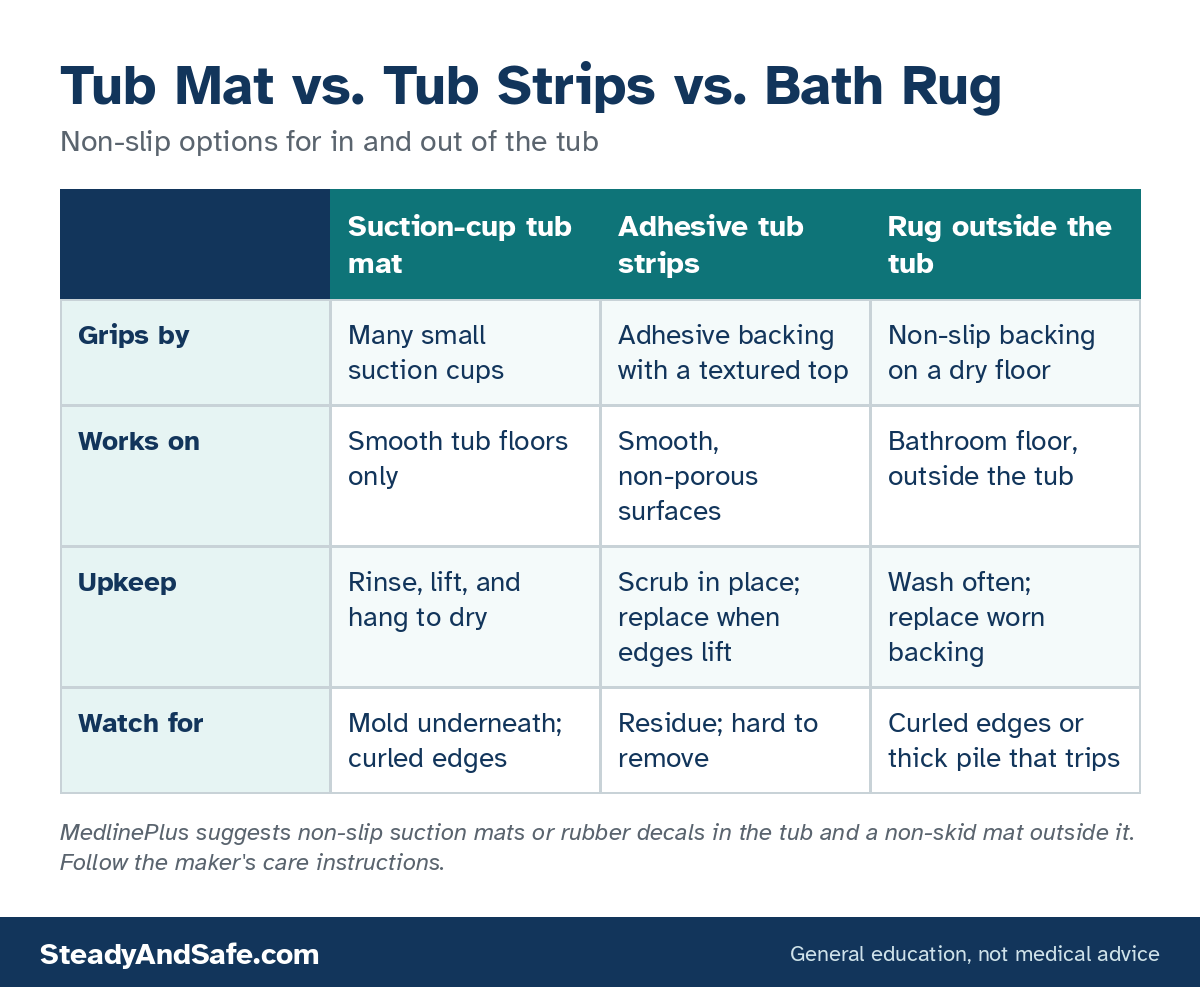
These are rubber or vinyl mats with many small suction cups on the bottom. You press the mat onto the tub floor, and the cups hold it in place while the textured top gives your feet grip. They're cheap, they come out for cleaning, and they're easy to replace.
The catch is the surface. Suction cups need a smooth, flat, non-porous floor to seal. On a textured tub bottom, a tub with an anti-slip coating, or a tub that has been refinished, the cups may not hold. Read the product's surface guidance before buying.
Adhesive tub strips and decals
These are textured strips or shapes with an adhesive back. They stick directly to the tub floor and stay there. Because there's nothing underneath them, there's nowhere for water and mildew to hide, which is the main advantage over a mat.
The tradeoffs: they take some prep (the tub has to be clean and fully dry before you apply them), they can leave residue when removed, and they wear over time. Replace them when edges lift, because a lifted edge can catch a toe.
Non-skid mats and rugs outside the tub
The moment you step out of the tub, with wet feet onto a hard floor, is a slip risk of its own. A non-skid mat outside the tub gives you a dry, grippy place to land. Look for a rubber or latex-free backing that holds the mat in place, and keep the pile low. Thick, plush bath rugs can be a trip hazard for anyone who shuffles or uses a walker.
Wash it often, and replace it when the backing starts to crack or the edges curl.
Which one fits your bathroom?
A standard bathtub with a smooth floor
A suction-cup mat is usually the easiest choice. If you'll be using a shower chair or tub transfer bench, choose a mat sized so the chair legs either sit fully on the mat or fully off it, not half on. Some mats, like the Carex Bath Mat below, are made to work with bath seats and benches.
A textured, coated, or refinished tub
Suction may not hold. Adhesive strips are often a better fit, as long as the surface is suitable for adhesive. If in doubt, contact the tub's maker or the refinisher.
A walk-in shower
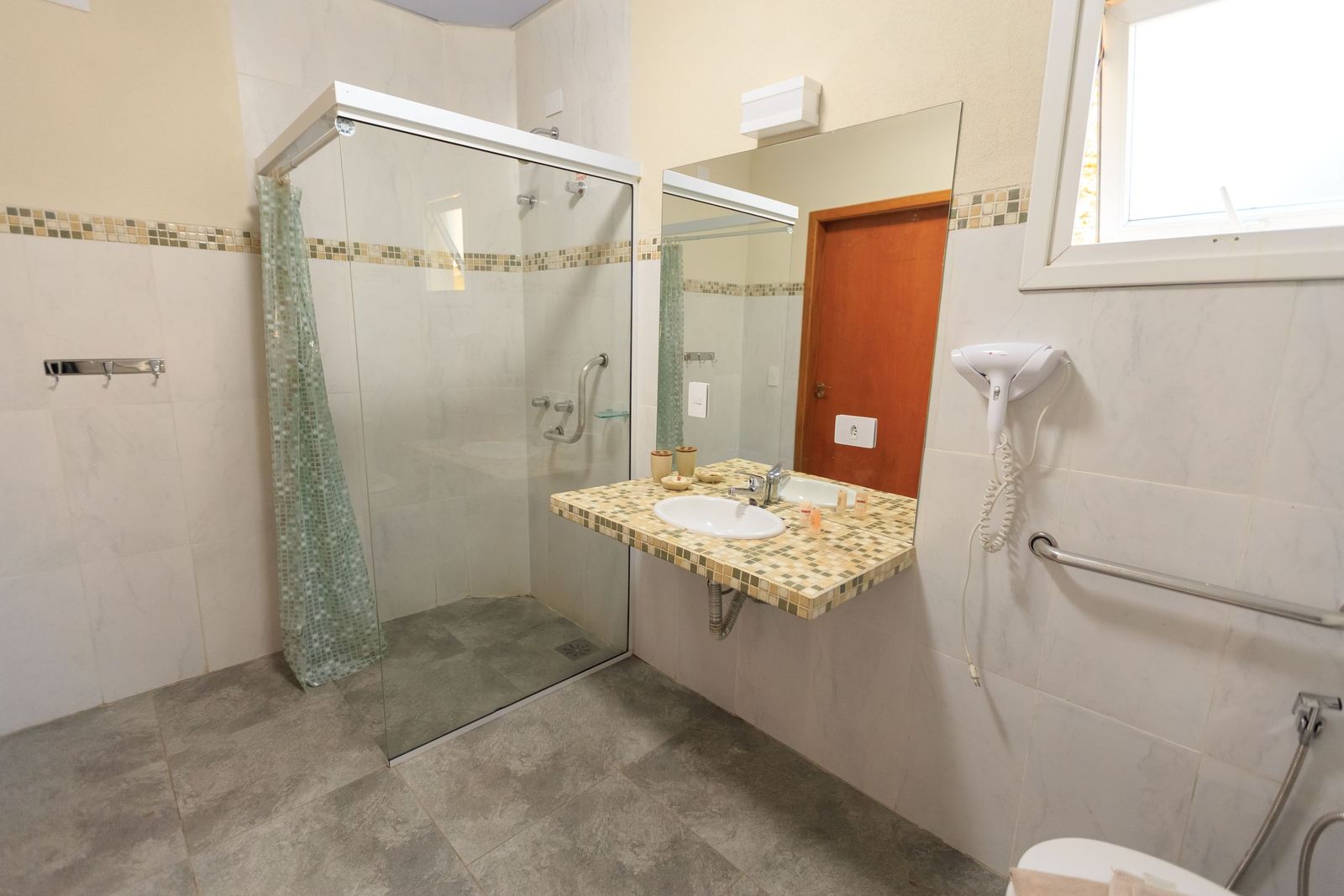
A square shower mat with a center drain hole fits many stall showers. Make sure the hole lines up with your drain so water doesn't pool.
After hip or knee surgery
The floor matters more when you're on a walker or have movement precautions. MedlinePlus's guide to getting your home ready recommends non-slip suction mats or silicone decals in the tub, a non-skid mat outside it, and keeping the bathroom floor dry. Pair the mat with a shower chair or tub transfer bench and grab bars, and see my list of what you need at home after hip or knee replacement.
What to look for
- A clear surface note. Good makers say which tub surfaces their mat works on.
- Many small suction cups spread across the whole mat, not just at the corners.
- Drain holes so water runs through instead of pooling on top.
- Latex-free material if anyone in the home has a latex allergy.
- Machine-washable or easy to scrub. You'll be cleaning it often.
- Mold or mildew resistance. This doesn't mean it can't get moldy. It means it resists it better with good care.
- A size that fits your tub without curling up the sides.
Keep it safe: care and replacement
A mat is only as safe as its last cleaning. The Vive Non Slip Bath Mat's FAQ, for example, tells users to rinse the mat and remove it after each use. Your mat's instructions may differ, so follow them. In general:
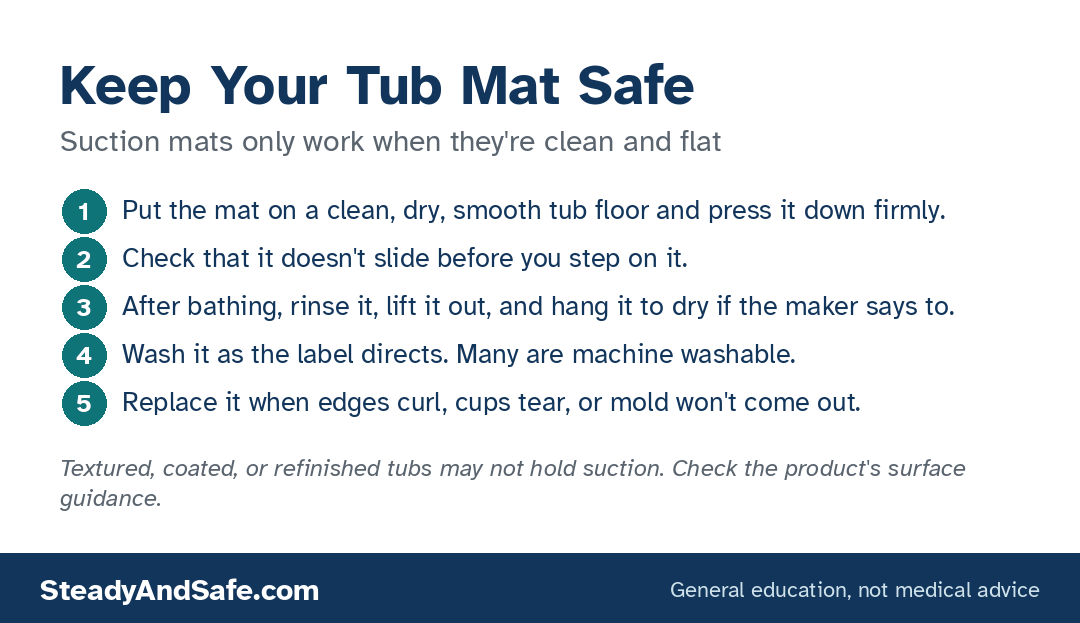
- Press it down firmly on a clean, dry tub floor before each use, and check that it doesn't slide.
- Lift it out to dry if the maker says to. Water trapped under a mat is what grows mildew.
- Wash it on a schedule. Many mats are machine washable.
- Replace it when the edges curl, suction cups tear, or stains won't come out.
- Keep the floor dry. Wipe up water outside the tub right away, and keep a towel within reach.
Products to consider
These picks come from each maker's published specs. I haven't used these mats myself, so these aren't hands-on reviews. Check the size and surface guidance on the product page before you buy.
Suction-cup tub mats
Vive Non Slip Bath Mat.
- Pros: 28 by 16 inches with 116 suction cups; ribbed top for grip; latex-free; mold resistant; machine washable.
- Cons: needs a smooth tub floor; Vive's FAQ recommends rinsing and removing it after each use, which is an extra step.
Drive Medical Bath Mat.
- Pros: a longer mat at 35.5 by 15.75 inches, which covers more of a standard tub floor; latex-free; mold resistant; suction cups on the bottom.
- Cons: shorter warranty (90 days) than some bath safety products; needs a smooth floor like any suction mat.
Carex Bath Mat.
- Pros: 16 by 32 inches with many suction cups and drainage holes; Carex says it's designed to work with bath seats and transfer benches.
- Cons: comes in one color and size; still needs a smooth tub floor.
For walk-in showers
Vive Shower Mat (22 by 22 inches).
- Pros: square shape for stall showers; 200 suction cups; a 6-inch center drain hole; latex-free; machine washable.
- Cons: the center hole only helps if your drain is in the middle of the shower floor.
Adhesive strips
I haven't picked specific adhesive strips yet. Look for strips that list your tub surface, are made for wet areas, and come with clear application steps. Apply them to a clean, completely dry tub and give them the cure time the maker lists before the first shower.
The bottom line
Put a non-slip mat or strips inside the tub, a non-skid mat outside it, and take loose rugs out of the rest of the house. Check that your tub surface suits the product, keep it clean and dry, and replace it when it wears. Then add the pieces that go with it: grab bars that can actually hold you, a seat if you need one, and the room-by-room home safety checklist for the rest of the home.
Questions people ask
Are suction bath mats safe for older adults?
They can help, as long as the tub floor is smooth enough for the cups to seal and the mat is kept clean and flat. MedlinePlus recommends non-slip suction mats or rubber silicone decals in the tub.
Mat or strips: which is better?
Neither is better for everyone. Mats are easier to remove and clean. Strips stay put and don't trap water underneath, but they're harder to remove. Textured or refinished tubs often need strips.
Why does my bath mat keep sliding?
Usually the tub floor is textured or coated, the mat or tub is dirty, or the suction cups are worn. Clean both, press the mat down firmly, and check the maker's surface guidance. If it still slides, try strips.
How often should I replace a bath mat?
When the edges curl, cups tear, or mold won't wash out. Check it every week or two.
Should older adults use bath rugs?
A non-skid mat outside the tub is recommended. Avoid loose throw rugs elsewhere, as the NIA advises.
Can I use a mat with a shower chair?
Yes. Choose a size so the chair's legs sit fully on or fully off the mat, and check that the chair still sits level.
Read next
Sources
- MedlinePlus bathroom safety
- MedlinePlus getting your home ready
- NIA room by room
- CDC older adult falls
- CDC fall prevention
Product details come from each maker's product page, checked October 2026.